

Teaching Our Kids That Convenience Isn’t Always a Good Thing
As a Millennial dad of two daughters, I’ve noticed something that probably won’t surprise you: our kids are growing up in a world of instant gratification. Want to watch a movie? It’s on Netflix. Want to hear a song? Stream it. Want to play a game? There are thousands on multiple platforms and types. You can even spend the whole day watching other people play an endless number of types and formats of games.
The blogger Freddie deBoer put it perfectly in his article “It’s So Sad When Old People Romanticize Their Heydays, Also the 90s Were Objectively the Best Time to Be Alive” when he said: “Yes, it’s better to have all this information. But it’s true, what they say, about how needing to expend more effort to do something gives you discipline and patience that has a value of its own.”
That quote really stuck with me. Because I think there’s real value in deliberately introducing some friction into our kids’ daily lives. Not to make things harder for the sake of being difficult, but to teach them patience, critical thinking, and the sense of grounding that comes from rituals that have a beginning and an end.
Things Are Really Easy to Do These Days
Things are incredibly easy to do and look up now, and even though it’s easy, we can miss out on the value and reward of the search. I’ll give an example of the opposite. Way back when I was a kid, I watched this cartoon randomly at a friend’s house. All I could remember about this show was that the characters on this show lived in some kind of underwater research lab and had this ability to jump into water and turn into these hybrid fish creatures. I never saw that show ever again, on TV or the video store. Sometimes I wasn’t sure if I had actually seen it, and it was some kind of dream my brain confused with reality. Even all the way up to grad school I would ask people, “have you ever seen a show like this?” And nobody had ever seen it or heard of anything like it (although one of my classmates in grad school had seen a show where the character turned into a car. That wasn’t it).
Fast forward to last year I thought about it randomly on a Tuesday afternoon and did a search online. I ended up finding a video where someone had done a full analysis and history of this show: Tiger Sharks (actually from the same producers as the cartoon Thundercats). After 35 years I had solved the mystery with a simple search. The search was easy but it was really the fact that it took so long to get the result/answer that made it so much more rewarding.
Learning to Live Through the Discomfort
In truth I do personally enjoy all of these conveniences. But I also worry that we’re raising a generation that doesn’t have to wait for anything, or never has to work through the discomfort of boredom, and never learns to appreciate the ritual that comes with doing things the hard way. I have lived through the time when that convenience wasn’t there. And I’m the type of person to personally enjoy doing things the hard way, then learning to do it the easy way and then teaching that process to others. And I want to do that with my kids so that they can grow up with both an appreciation of the convenience but also awareness, and hopefully appreciation of the inconvenience.
So here are four ways I believe we can add a little productive inconvenience into our children’s lives. These are things I already do with my daughters and plan to either continue to do or start or do more of when they are older.
1. Make Them Walk Somewhere
Walk to the Park
When my kid asks to go to the park, instead of piling into the car (and go through the rigmarole of getting her into the carseat) I take her for a walk to get there, when possible.
The walk there builds anticipation. We can talk about stuff along the way. You notice things along the way – neighbors’ gardens, dogs in yards and if it’s near the holidays you can look at all the decorations in people’s yards. It’s not just instant gratification; it’s a small adventure. We have a wagon that I take since my daughter prefers that over a stroller. I get exercise on the way and she can look around at more stuff. My daughter will ask “why is the park so far away?” I tell her because it takes time to walk there vs taking a car (and believe it or not the park isn’t that far. It just feels farther because it takes time to walk there). I want her to appreciate the space between home and the park and have a grounded sense of place and distance.
Go on Hikes Together
Similarly, my plan is to do more family hikes. Not elaborate backpacking trips, just local trails where you can spend a couple hours walking through the woods if we can get there before the parking fills up.
A hike offers something different from the park. It demands physical effort, patience when legs get tired, and problem-solving when navigating a tricky section of trail. And here’s what I’m hoping: by the end of the hike, my kids will be proud. They’ll have accomplished something that required sustained effort.
My daughters can’t hike that much, but the times we have gone we’ve just wandered around at the base of the trail. Once we went the morning after a big rain. There was a stream of water coming down the middle of the trail. I crouched down with my daughter and we took turns putting leaves and things into the stream, watched them bump into rocks and flow down the hill. That sort of minute fascination with something simple in nature is not something you can easily get from screen time.
Teach Them to Move More Intentionally
Beyond specific activities like walks and hikes, I believe there’s value in creating more opportunities for kids to just move their bodies as part of daily life. Taking the stairs instead of the elevator. Carrying their own backpacks. Helping move groceries from the car to the kitchen like my mother always made us do. It’s what the trending parenting gurus refer to as the Montesssori style of raising your kids. I’ve mentioned this before in my tutorial for Sewing a Kids Placemat.
These are small things, but they add up. I believe they create a connection between effort and outcome that gets lost when everything is optimized for maximum convenience. Now again to be fair, we have a dishwasher and I love just putting stuff in the dishwasher at the end of the day instead of scrubbing them for 20 minutes. But there’s something to be said about being mindful when you’re washing the dishes. Again, there’s the minute feeling of accomplishment that you get with each cleaned dish. And seeing the stack of clean dishes on the counter. It’s like seeing a freshly tidied up room, which I also try to emphasize when my daughter cleans up the living room (I got this from a random Reddit post I read about someone’s mother always talking about how much better the room looked after they cleaned up).
2. Make Them Wait and Work Through Boredom
Wait in Line for Something Special
Find something in your area that’s worth waiting for. A place where people line up because what they’re getting is worth the wait like a breakfast place or coffee shop.
I think the waiting should be part of the experience. Again, I hate waiting for things. I’m the kind of person who will eat lunch early or late to miss the rush. But this is one of those situations where you endure it because you want your kids to learn the lesson. You can teach them to deal with the boredom without resorting to social media. Talk to them. Find something around you to pass the time. Watch the other people in line. And when you finally get whatever it is you’ve been waiting for, I believe it’ll taste better because of the wait.
The waiting becomes part of the ritual. Over time, when kids ask to go get that special thing, they’ll know they’re going to wait, and that’ll just be part of it. You build in that wait and reward as part of the experience.
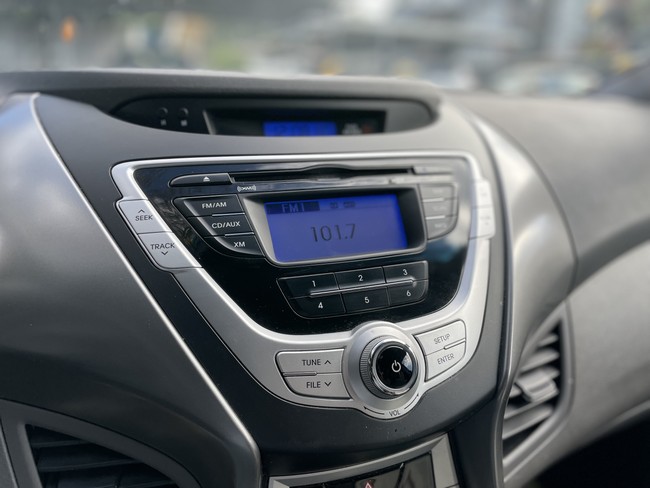
Drive in the Car and Listen to FM Radio
I thought of this one on my morning commute one day. Listen to the radio in the car. When I was a kid riding in the car with my mom, she would listen to the easy listening station. Back then it was the “best mix of the 70’s, 80’s and 90’s”. That meant Whitney Houston, Hall and Oates, the Beatles, songs I likely wouldn’t have heard unless they came on the radio. So I thought about doing this with my kids.
That means they’ll have to listen to songs they don’t like all the way through. They can’t skip. They can’t curate their perfect playlist. Maybe they can change the station but that’s about it They’ll have to sit with something they didn’t choose and in the process the hope is that they’ll discover something new because of it. It’s like going to the book store and just looking through the aisles to see if there is anything that catches your eye.
And again it’s the same process of seeing the neighborhood while you’re riding the wagon to the park. You can not escape on your phone through a portal to anywhere. You are there in the car, grounded in the moment listening to songs you didn’t choose. And listening to it with someone else who didn’t choose the song either.
I believe it’ll also teach them that they don’t always get to be in control of their environment. The world doesn’t always cater to your preferences, and that’s okay. Sometimes you get a song you like and sometimes you don’t. That’s life.
Play Old Video Games Without Saves
I plan on playing video games with my kids when they get older. But the exception here is that I plan to play either collaborative games or older 8-bit style games like the original Super Mario Brothers. I plan on showing them the games where if you die then you have to start the level over. So they have to learn to practice and iterate. I mean that was the whole premise of the movie Edge of Tomorrow. No games with saved or respawns. Tom Cruise had to go through the whole process every single time while he inched further and further along until he (spoiler alert) defeated the Omega.
There is bound to be an initial level of frustration. That whole wanting to throw your controller across the room feeling is part of the process. But the goal here is to introduce the concept of iteration. Do it and fail. Then the next time do it better.
The exception here is playing RPGs with my kids or encouraging them to play them on their own. I grew up playing RPGs like Final Fantasy, especially Final Fantasy 6. I like the lesson of patient storytelling, completing quests and leveling up that these games are able to teach people. Research has shown too that these kinds of games can help teach focus and resilience.
3. Make Them Create Things From Scratch
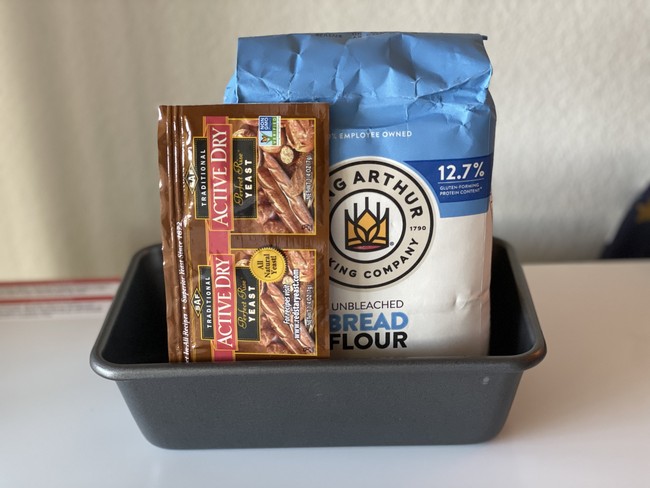
Bake Bread Together
Bread is one of those things that teaches patience whether you want it to or not. You mix the ingredients, then you wait for it to rise. After that you pound it down, then you wait again to let it proof some more. You bake it, then you have to wait for it to cool before you can eat it.
I believe kids will learn that good bread takes time. You can’t rush it. You have to trust the process. And when you finally sit down to eat warm bread that you made yourself, it’ll be special in a way that store-bought bread can never be.
I believe the whole ritual of making bread – measuring, kneading, waiting, checking, watching it bake will create this sense of accomplishment and connection that you just don’t get from buying ready made bread from the store.
We haven’t made bread together yet but my daughter already gets to experience a similar process when we bake pies (mostly pumpkin pie so far) or cookies. She always wants to eat the pie as soon as it’s done cooking. But I tell her that you have to wait for it to cool down (usually a while with pumpkin pie) before you can eat it.

Teach Them to Sew and Make Their Own Things
I’ve written about this before, but teaching kids to sew is something I believe will be incredibly rewarding. Buying things online is incredibly easy and fast these days (by design of course). Anything you can imagine you can order online and get it almost the same day, and for cheap. So that makes the appeal of getting anything you need immensely appealing. If you make it a habit then kids can see how easy it is as well. Like whatever they can imagine appears out of thin air. And again, I want my kids to be aware of a world where those conveniences may not exist and get a sense of the actual process of how things come to be. A place where you go through the process of planning how to make something, choosing just the right materials and taking the steps to make it by hand.
Instead of leaning into the Buy Now button, when your child wants a new stuffed animal or a bag for their toys, take them to the fabric store (RIP Joann’s). Let them pick out a fabric they like, and make it together. If they see a stuffed animal at the store, take some measurements and show your child how it’s sewn together. Show them how it is constructed and give them a sense of making something of lasting quality.
Making Good Things Takes Time
Show them that the process takes time. Give them a sense of the ritual. Sometimes they’ll make mistakes and have to start over, and that’s what seam rippers are for. But at the end, they’ll have something they made with their own hands. Something that’s truly theirs in a way that a mass-produced toy could never be. Let them know that they can make the things they want and imagine, not something someone else put on a shelf. And more importantly, know that good things take time.
Something like this isn’t out of reach for you if you want to learn how to do it either. Sign up for my machine sewing course and get started sewing this weekend! And it doesn’t end with custom baby bags. Imagine designing and making your own custom baby clothes, quiet books, blankets or camping gear for your kids.
Get started sewing your own stuff here!
I’ve already made custom stuffies for my daughter and look forward to the day when I can teach her to sew them herself. If you want to get started sewing stuffies, here is a tutorial for a simple Dino nugget plushie.
Make Ceramics
We also recently took a ceramics class through the city’s parks and recreation department. Doing ceramics with a three year old proved trying at times. It’s because the process of making things with clay is incredibly slow and deliberate. You shape the clay. You wait for it to dry. It gets fired in the kiln. You glaze it. It gets fired again. The whole process took weeks. We took the class at the end of the year so at the end of the class we had some cool clay ornaments too.
That slowness was the point. The goal in teaching the class was that creating something beautiful takes time and patience. I want my kids to learn that you can’t rush art. And that involves learning to sit with the discomfort of not having instant results.
4. Make Them Engage With Physical Media and Analog Processes
Write and Draw With Pencil and Paper
My plan is to institute a simple rule in our house: if you want to write a story or draw a picture, you start with pencil and paper. No iPad, no digital drawing tools, just old-fashioned pencil on paper.
I think there’s something important about the physical connection between hand and paper. There have even been studies done showing how writing with a physical pen on paper activate the brain in a different way than typing on a computer and it contributes better to memory. I prefer the idea of making marks that can’t be instantly erased with CMD+Z. Just like sewing a stitch, there is something about the permanence of putting something down and having to live with it or cross it out and try again.
I believe children will learn to think more carefully about what they’re creating because fixing mistakes requires actual effort. They’ll plan more and be more intentional. And most importantly, again like sewing your own stuffie or making your own ornaments, the final product will feel more real because they can hold it in their hands and show people. It can’t be deleted or run into formatting errors.
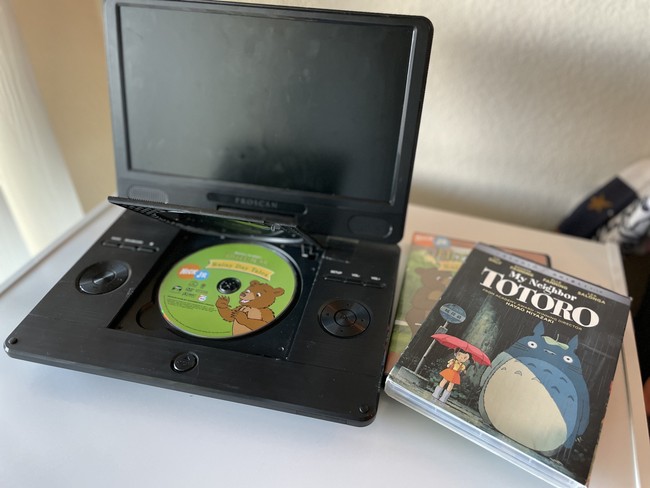
Go to the Library to Rent Movies
This is one of my favorite ideas. It’s actually a throwback to when I was a kid. Back when video stores were still a thing, we always used to go to the video store to rent movies on Friday night (and I got to get a video game). These days video stores are pretty rare, but you can still borrow DVD’s and Blu-ray Discs from most libraries, even some new releases (if you don’t mind waiting, which is also the focus of this essay).
Instead of just scrolling through Netflix and picking something instantly, take kids to the library. They’ll browse the shelves. Read the backs of DVD cases. Debate which movie looks best. They’ll only be able to pick one or two, so if you have multiple kids then they will have to learn to compromise.
Then you come home, and you have to put the DVD in the player. You sit through that FBI warning that you can’t skip over. Then you pop some popcorn and you watch the movie together, all the way through. You not only have the family experience of watching a movie together, but you also have the ritual, like going to the park, of going through all the steps of getting a physical movie. There are a lot more steps than just opening an app.
The Ritual is Part of the Process
I believe this whole ritual of driving to the library, browsing, choosing, driving back home, setting up the DVD player, watching together will create this sense of intentionality that streaming just doesn’t have. The movie goes beyond just consuming content. It becomes an event you experience together.
When you’re done watching the movie, you have to take the DVD back. The experience has a clear beginning and an end. That’s something that gets lost when you can just scroll infinitely through streaming options and the platform will autoplay the next thing. I try to limit screen time with my kids (mainly because I can’t deal with the withdrawal), but it is still something we enjoy from time to time when we make trips to the library. But it’s something I plan to do more regularly, like when I was kid, more regularly when they have more self control.
Find a Pen Pal
If your kid is old enough, finding them a pen pal through their school, community organization or family connection, is a wonderful way to introduce friction. Writing a letter by hand takes time and thought. Waiting for a response requires patience. The whole exchange slows down communication in a way that teaches kids that not everything needs to happen instantly.
Children could spend time crafting their letters, drawing pictures in the margins, picking out stickers to include. They put the stamp on the envelope and put the envelope in the mail box. Then they wait for a response.
The waiting teaches delayed gratification. It teaches them that good things are worth waiting for. And when that response letter finally arrives in the mailbox, it becomes special in a way that a text message could never be. They also get that feeling of opening and reading a physical letter that they can’t get from tapping on a smartphone.
Why This Matters: Rituals Create Mental Clarity
My plan isn’t to punish kids or to make their lives needlessly difficult. I believe that rituals matter. Having a beginning and an end to something matters. That the process matters as much as the outcome. Then the friction and in-between time makes space to experience the event.
When we introduce friction into kids’ lives, whether that’s making them walk to get ice cream, wait in line for something special, or create something from scratch, I believe we’re teaching them that stillness and patience aren’t bumps to be avoided.
Stillness creates mental clarity. It helps you recharge. It grounds you in the present moment instead of constantly looking ahead to the next thing.
And that’s something I want my daughters to understand. Not everything needs to be optimized and automated. Not everything needs to be instant. Sometimes the inconvenience is the point.
The Discipline of Inconvenience
Freddie deBoer was right. Needing to expend more effort to do something does give you discipline and patience that has value. This teaches you to sit with discomfort. It teaches you to plan ahead. It teaches you that good things often require waiting and working.
My hope is that children who experience these kinds of intentional friction will develop this understanding over time. That they’ll learn that sometimes we have to wait. That sometimes we have to work for things. That sometimes the journey is part of what makes the destination special.
I’m not trying to turn back the clock or pretend we live in some analog world that shuns modern technology. Technology is still be part of our household. My kids will still watch shows on streaming services. They’ll still play games on tablets and take classes on computers.
But I want to balance that convenience with intentional inconvenience. With rituals that slow us down and ground us, and my kids. Ground us with experiences that teach our children that patience, effort and waiting all have value.
Because I think convenience isn’t always a good thing. Sometimes friction is exactly what we need.
Final Thoughts
Obviously this approach isn’t for everyone. Some might think this is unnecessarily difficult or depriving kids of modern conveniences for no good reason. But I’d imagine that if you’re reading this then some of it probably resonates with you. So these are some things as a parent to consider.
Have your kids write a letter by hand instead of texting. Listen to a song on the radio. Bake bread together and wait for it to rise. Go the library as a family and get a movie to watch on Friday night. See what happens.
When we slow down, when we introduce friction, when we embrace rituals that have a beginning and an end, we create space for connection, meaning and presence. And in a world that’s constantly pushing us to move faster and consume more and optimize everything, that space is precious.
Are you already doing any of these things with your kids? Do you have other ideas for introducing productive friction into your kids’ lives? I’d love to hear about it in the comments.
Leave a Reply